Area : 73.89 square kms.
Population : 3,22,248
Language : Hindi and English
Best Time To Visit Varanasi / Best Season / peak season : October - March
Religion Predominantly : Hindu, 25% Muslims, some Jains
Varanasi is one of the ancient seats of learning in India and situated between Delhi and Kolkata at a bend in the sacred Ganges River. Home to some of the most ancient and revered monasteries in the world, Varanasi is the place where scholars still come to learn the ancient knowledge of the
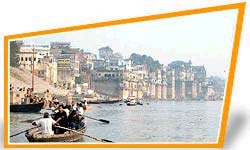
Vedas and debate on nature of God. For over 2,000 years it has been the religious capital of India, more revered and sacred than all the other places of pilgrimage put together. Hindus believe that to die in Varanasi is to be forgiven every sin, receive instant enlightenment and immediately be admitted to heaven, no matter who or what you are. As a result the elderly flock here to end their days, and cremation is big business on the ghats beside the Ganges.
Varanasi was the focal point of the 15th century revivalist Hindu Bhakti (devotional) movement under saints like Ramananda and Kabir. Kabir, the son of a Muslim weaver, was venerated both by Muslims and Hindus. There is a story about the tussle between the two communities on his last rites. According to popular legend, his body turned into a heap of flowers, and was divided into two for burial by the Muslims and cremation by the Hindus. The poet-saint Tulsidas also lived here, and translated the epic Ramayana from Sanskrit to Hindi.
Ghats of Varanasi- The Asi GhatThe Asi River meets the Ganga at Asi Ghat. There is a lingam under a peepul tree and a marble temple to Asisangameshwara (lord of the confluence of Asi). An ancient tank dedicated to sun worship, the Lolarka Kund (pool) lies 15 metres below the ground and is approached by a steep flight of steps.
- The Kedar GhatThe Kedar ghat has links with the Kedarnath shrine located in the upper reaches of the Himalayas. The Dhobi ghat is a washerman’s area, while the Chausathi (64) ghat has a shrine dedicated to Chausath Yoginis, the multiple manifestations of the female force Durga.
- The Man Mandir GhatThe Man Mandir ghat, built in 1600 by Maharaja Man Singh of Amer has a very interesting observatory. Built in 1710 by the king of Jaipur, it is similar to the ones in Jaipur and Delhi. There are numerous instruments used for astronomical calculations. The observatory is open to visitors from 09:30 am to 05:30 pm.
- The Dashashwamedha Ghat The Dashashwamedha ghatis the busiest bathing ghat in Varanasi. The ancient king Divodasa was said to have performed the Dashashwamedha Yagya (Ten horse sacrifice) here. This pleased Brahma, the Creator, so much that he established the Brahmeshwara lingam. Boats can be hired at this ghat for a tour of the riverfront. It is also the most popular site for Hindus to perform ancestor worship rituals, and the entire ghat is lined with umbrella covered stalls where Brahmin priests perform pujas.
- The Mir GhatThe Mir Ghat has a shrine to Vishalakshi (the wide-eyed goddess). It is one of the 52 pithas (pilgrimages) where the body parts of Shakti landed after a distraught Shiva performed his dance of destruction or
tandava.
- The Lalita Ghat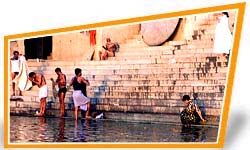
The
Lalita Ghat is well known for its Nepali style temple with an idol
of Pashupateshwara. This ghat also has a temple dedicated to the
Ganga.The Manikarnika Ghat is perhaps the most well known cremation
ground in the country. Since Shiva, the lord of Destruction, is said
to have resided in Varanasi, the entire holy area is considered
Mahashmashana (the great cremation ground).
ClimateSummers
are hot and humid in Varanasi. Day temperatures can rise up to 45°
C. Winter is comfortable with average temperatures of around 25°
C, though the nights tend to be much cooler at around 7°C. The
monsoons arrive at Varanasi in the months of June / July and it
rains through till end September & early October.
How
to Reach- By AirVaranasi is
connected by air with major cities like Delhi, Agra, Khajuraho,
Calcutta, Mumbai, Lucknow and Bhubaneshwar. The Babatpur airport at
a distance of 22 kms from the city is linked by a shuttle bus
service that takes passengers upto the Cantonment. Alternatively,
you can hire a taxi to take you into the city.
- By TrainThe
main railway station is the junction station near the cantonment
area. It is about 3 kms from the old city centre and can be accessed
on autorickshaws and cycle rickshaws. The other major rail station
is at Mughalsarai, 16 kms from Varanasi. Some of the major trains
connecting to Calcutta, Guwahati and other places stop at Mughal
Sarai. It is easy to find transportation from here to reach
Varanasi. There are buses and taxis that ply to Varanasi.
-
By RoadMost buses terminate a short distance from the
junction station, and some at the cantonment bus station. Buses
connect to Gorakhpur, Gaya, Allahabad, Lucknow, Delhi, Khajuraho and
places in Nepal.